Fat Loss Basics: How a Calorie Deficit Works

A simple, realistic guide to losing fat while keeping muscle: calories, protein, training and patience.
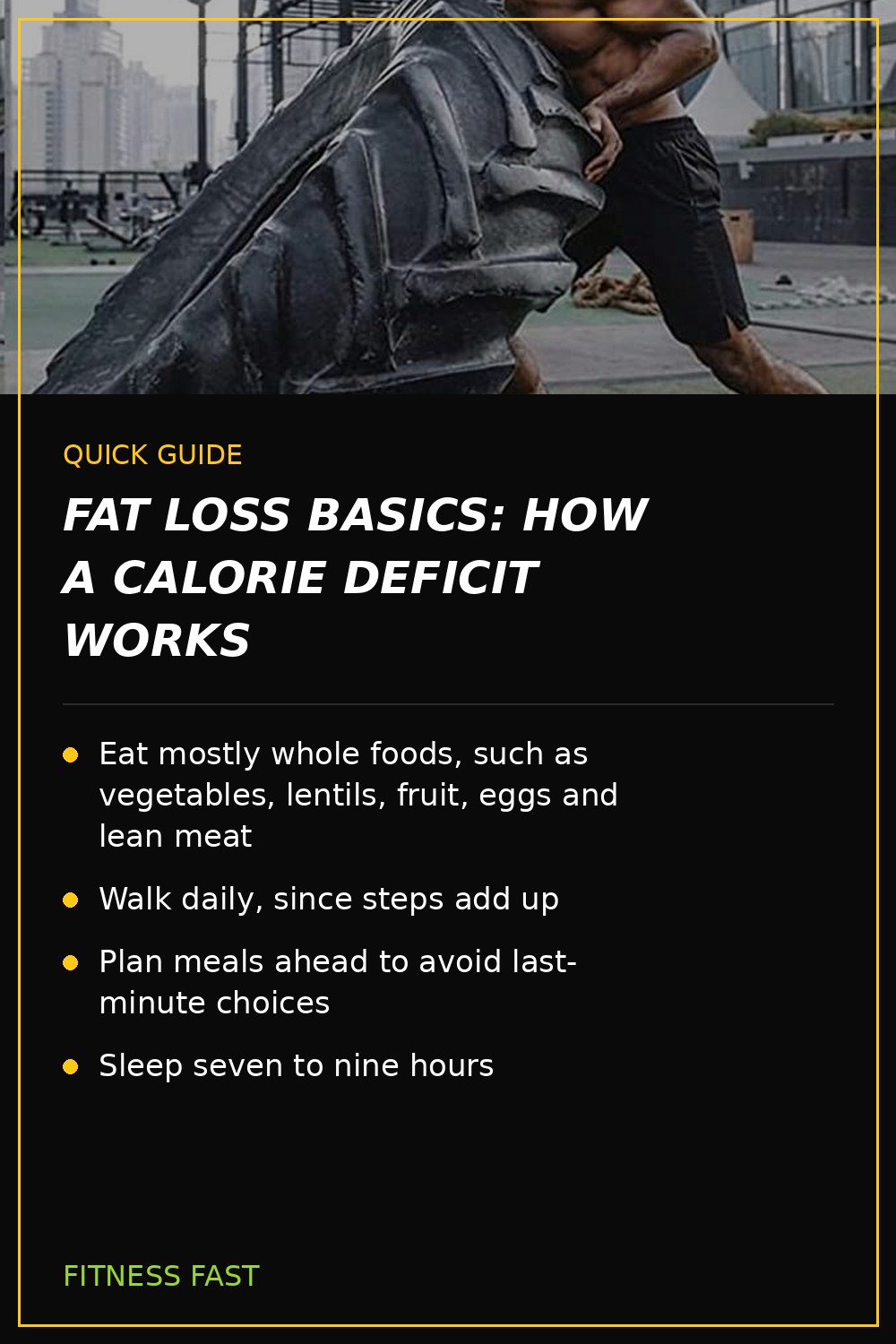
Fat loss comes down to eating fewer calories than your body uses over time. The details are simple, but sticking to them takes patience.
What is a calorie deficit?
Your body needs a certain number of calories each day to maintain its weight. Eating below that number creates a deficit. A moderate deficit of about 300 to 500 calories per day often leads to roughly 0.25 to 0.5 kg of loss per week. These are estimates and individual results vary.
Find your starting point
Use the calculator on our home page to estimate maintenance calories. Then subtract a modest amount. Track your weight and adjust every two weeks, instead of reacting to daily changes.
Keep protein high
Aim for about 1.6 to 2.2 grams of protein per kilogram of body weight. This helps you keep muscle while you lose fat and keeps you feeling fuller.
Keep lifting
Resistance training tells your body to hold on to muscle. Keep your weights as heavy as you can, even if your reps drop a little.
Practical tips
- Eat mostly whole foods, such as vegetables, lentils, fruit, eggs and lean meat
- Walk daily, since steps add up
- Plan meals ahead to avoid last-minute choices
- Sleep seven to nine hours
Avoid extremes
Crash diets are hard to maintain and can leave you tired. If you have a history of disordered eating, a medical condition, or are pregnant, speak with a doctor or registered dietitian first.
Keep reading

Beginner Gym Plan: Your First 4 Weeks
A simple 3-day full body routine for people walking into a gym for the first time, with sets, reps and rest times.

How to Squat Properly: 5 Cues for a Stronger Squat
Five simple coaching cues that help you squat deeper, stay balanced and protect your back.

Pull-Up Progression: From Zero to Your First 10
A step-by-step plan to build your first pull-up and then take it to ten clean reps.