Pull-Up Progression: From Zero to Your First 10

A step-by-step plan to build your first pull-up and then take it to ten clean reps.
The pull-up is a simple test of relative strength. If you cannot do one yet, that is normal. You can build up to it with a few weeks of focused practice.
Step 1: Dead hangs
Hang from the bar with straight arms and shoulders pulled slightly down, away from your ears. Aim for 3 sets of 20 to 30 seconds. This builds grip strength and tolerance in the shoulders.
Step 2: Scapular pulls
From a dead hang, pull your shoulder blades down and together without bending your elbows. Do 3 sets of 8. This teaches your back to start the movement.
Step 3: Negatives
Jump or step up so your chin is over the bar, then lower yourself as slowly as you can, aiming for 4 to 5 seconds. Do 4 sets of 3 to 5. Lowering strength comes before lifting strength.
Step 4: Assisted and band pull-ups
Use a resistance band or an assisted machine and reduce the help over time. Do 3 sets of 5 to 8 reps.
Step 5: Your first full rep
Once you can lower for 5 seconds, try a full rep. Start with palms facing you (chin-up grip), which is usually easier, then move to an overhand grip.
From one to ten
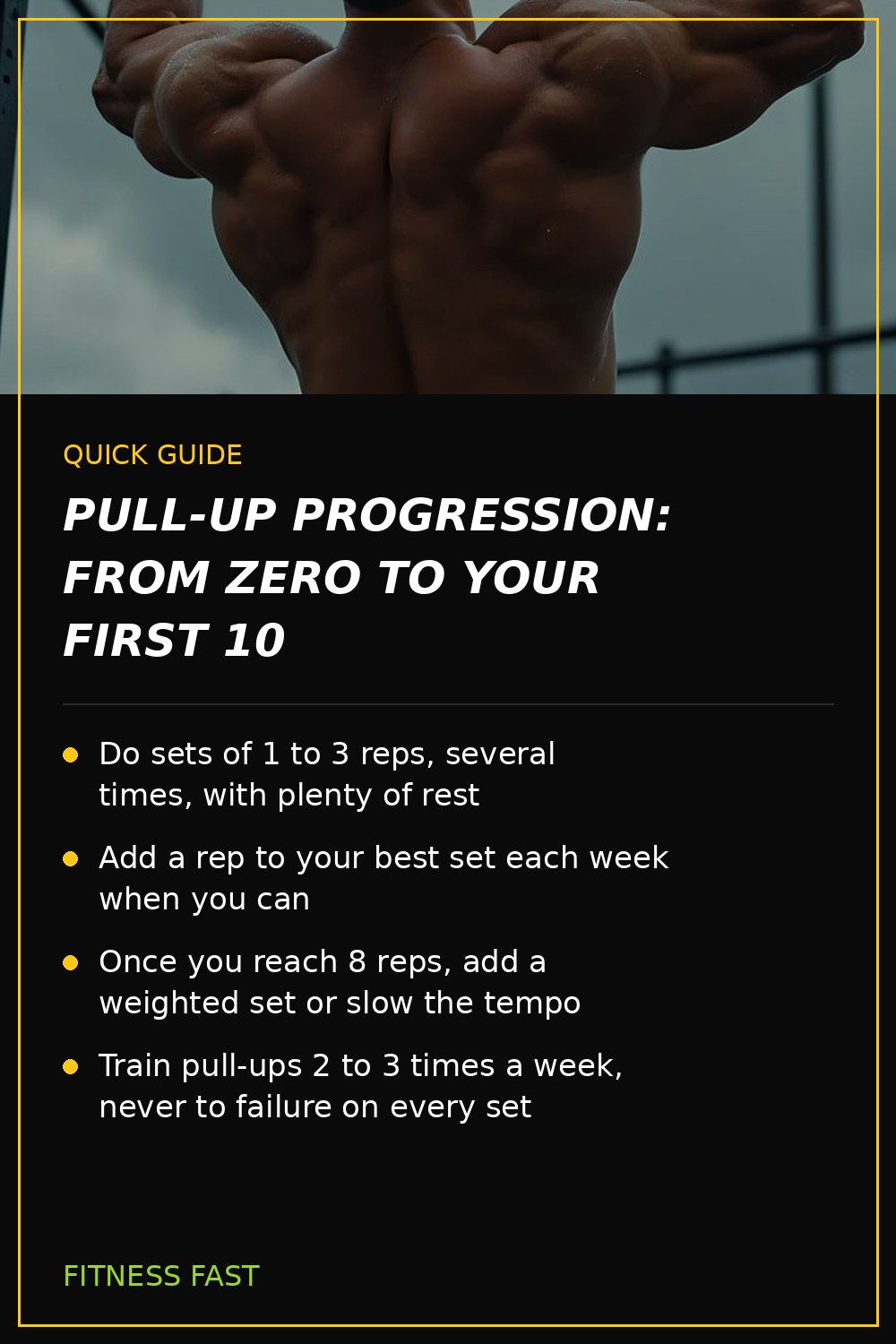
- Do sets of 1 to 3 reps, several times, with plenty of rest
- Add a rep to your best set each week when you can
- Once you reach 8 reps, add a weighted set or slow the tempo
- Train pull-ups 2 to 3 times a week, never to failure on every set
Also build your back with rows and curls. Expect this to take anywhere from a few weeks to a few months, depending on your starting point and body weight.
Keep reading

Push Pull Legs Split Explained
What a push pull legs split is, how to schedule it, and who it suits best.

How Much Protein Do You Need to Build Muscle?
Evidence-based protein targets for lifters, with simple food examples and an easy way to calculate your number.

Strength Training for Women: Myths and a Starter Plan
Why lifting weights is great for women, which myths to ignore, and a simple plan to start.